We are in Peru
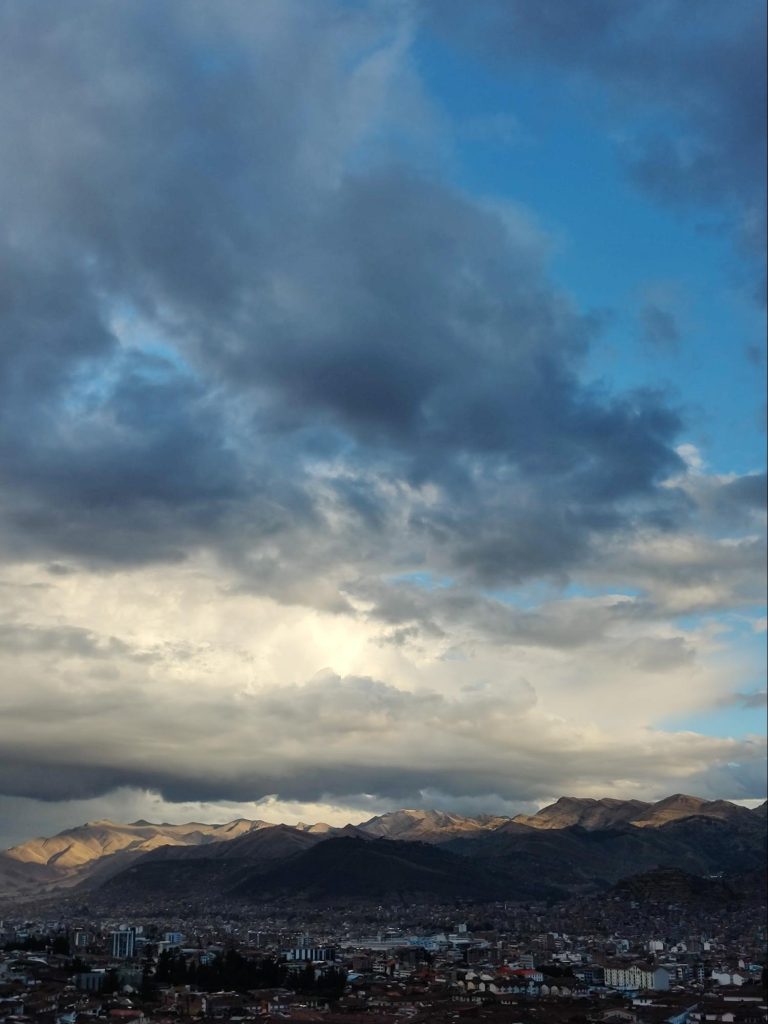
It's spring here now, which means the rainy season is about to begin. We've already been getting light showers daily. But we've been successfully avoiding them. And now it's pouring. And we're under the roof of a small hut for hikers on the Salkantay trail.

Luckily, today's route was completed two hours earlier than the map indicated; otherwise, we would have been soaked. The rain had already terrified the hikers today, and they had to get out their raincoats, but then it changed its mind and let the sun shine for a while.
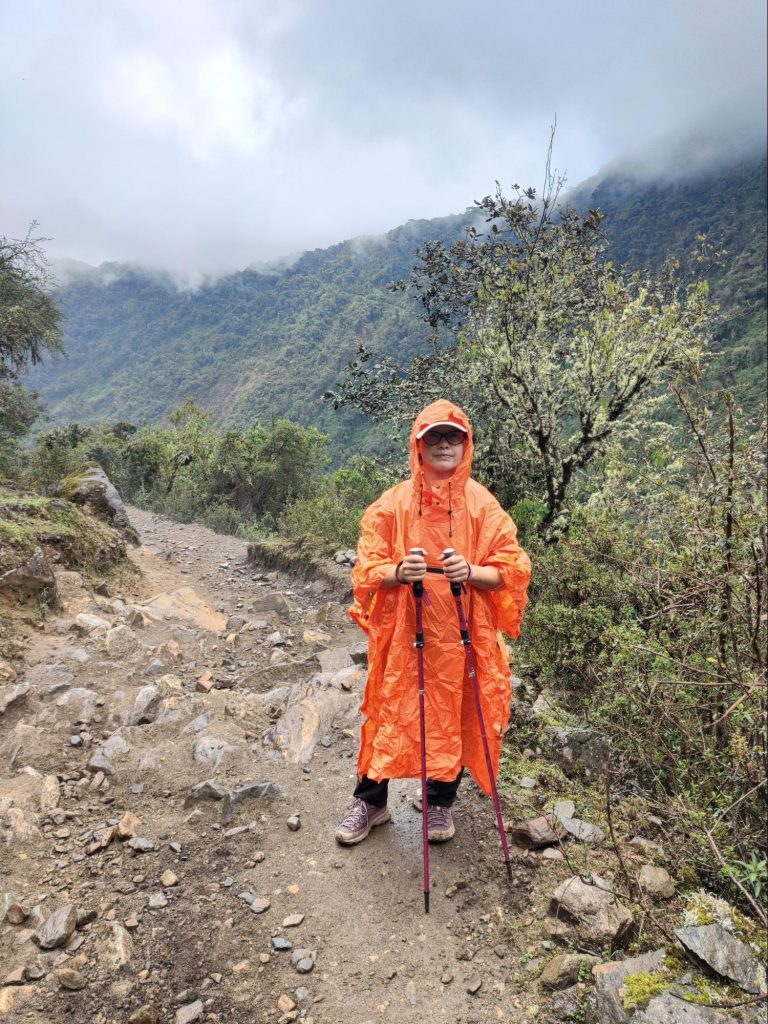
The Salkantay Trail leads to Machu Picchu, an ancient Inca city. Denis came up with the idea of hiking it as a great alternative to organized tours. Knowing they were paid for it, we still didn't want to use the Sherpas. But it was hardly a real hiking trip either, as we were traveling light, with practically no food, tents, or sleeping bags. Such journeys have long been practiced by wandering people, but for us, it was a new experience.
A visit to Machu Picchu was meant to be the highlight of our trip, so we prepared seriously. After arriving in Cusco, we spent two days getting used to the thin mountain air, walking through the historic part of the city.
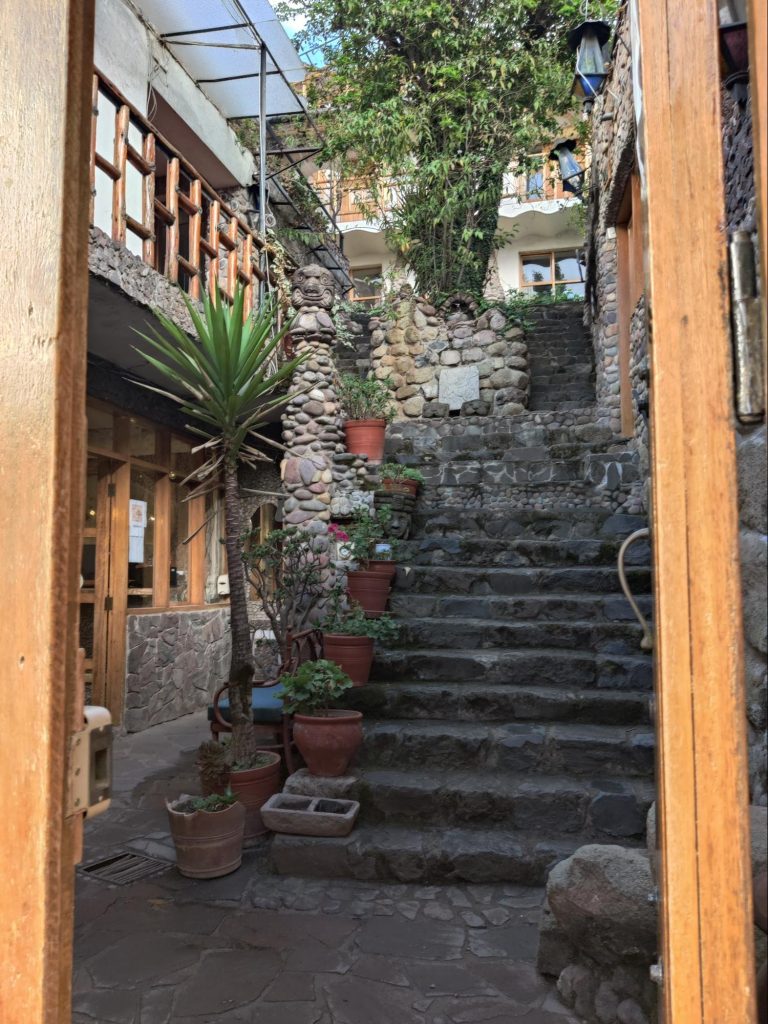
Of course, the streets are up and down, just the way we like them, which should help us on the trail. We're temporarily leaving our hotel. Our suitcases with civilian clothes are in storage. Our light backpacks are packed.
Very early in the morning, we boarded the minibus that would take us to the trailhead. I thought I'd get a nap, but it didn't work out. Very soon, we found ourselves on steep, serpentine bends. I started to feel nauseous. Since we were in the back seat, we were bouncing around more than the others. Denis moved to the center and started looking straight ahead, saying it was the best way to get over motion sickness. I mitigated it with mint gum and wiping my face with cold condensation from the window. Don't blame me for that, I was really sick then. When we stopped for breakfast in one of the mountain villages, I was completely hungry; I couldn't even swallow a bite. But Denis, I noticed, had recovered and was tucking into some fruit. Later, we decided that this had been the hardest part of our journey.
How good it was to get out of the stuffy car and breathe in the clean mountain air!
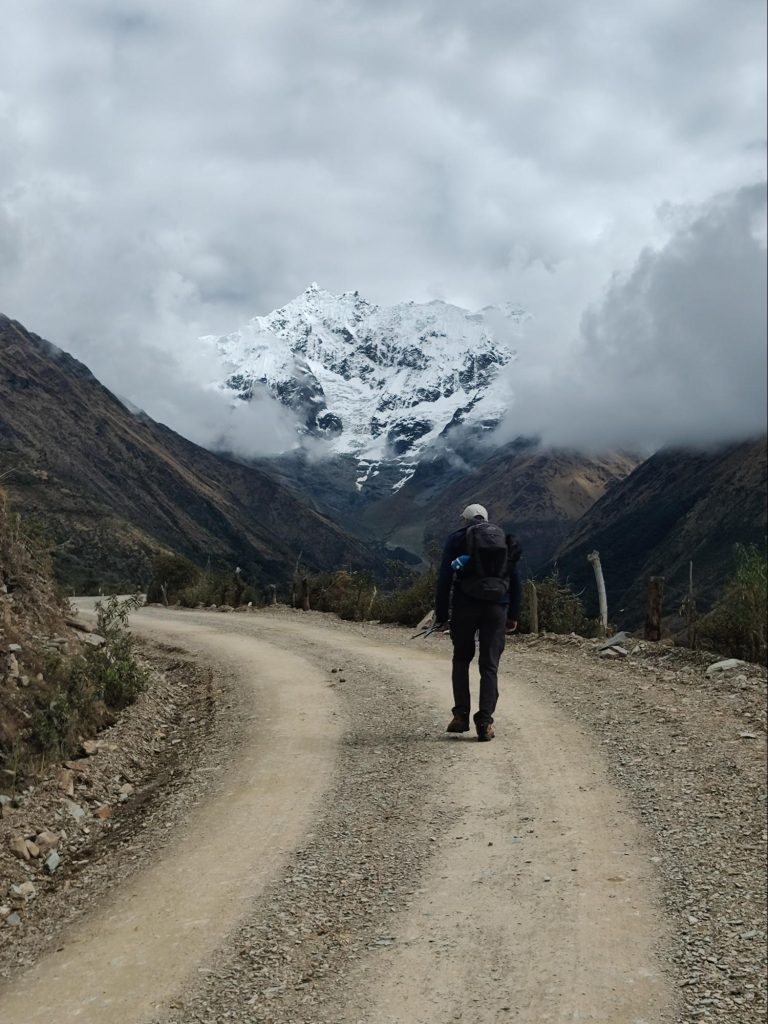
A couple of about thirty-five years old joins us on the trail. They speak English, and we exchange a few words. We head in the same direction and agree to meet later at camp.
The trail immediately climbs steeply. In the thin mountain air, my head immediately starts to ache and I feel slightly nauseous. Perhaps it's the effects of driving on mountain roads, or maybe altitude sickness is taking its toll. We continue along the trail, and Mount Salkantay looms ahead, as if encouraging us.
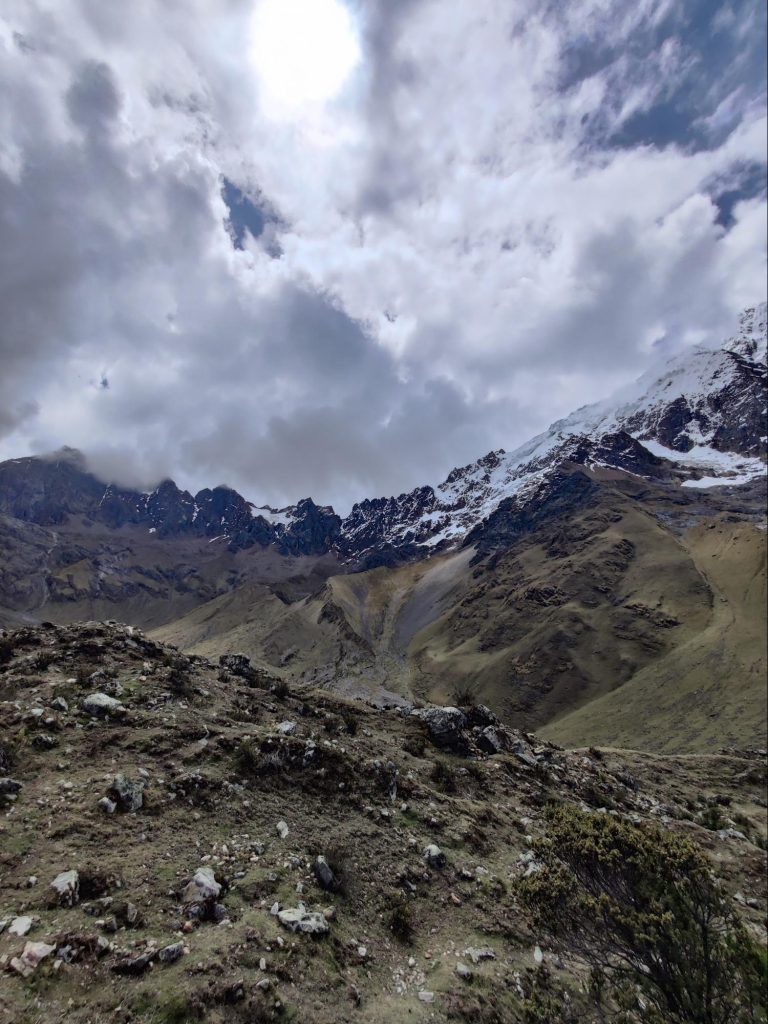
The trail leveled out, and for a long time we walked along a narrow channel filled with water. But you can't drink it. We've been warned. In these parts, only bottled water is allowed because there are a lot of livestock, which can carry diseases.

About two and a half hours later, we reach the Surayapampa tourist camp. Here we'll spend the night in a small wooden cabin with a proper bed and a transparent roof.

In the meantime, we can relax in a wooden chair and drink some coca tea. The taste is pleasant, but it didn't overly perk us up.
We met the same guys who started with us there, and we finally got to know each other and even started chatting over a glass of tea. They're Molly and James, from Australia, they've been saving up for three years for a big trip and are now exploring Latin America for seven months straight.
Our cultural program for this day also includes a visit to the sacred Humantai Lake.

There's only a short climb left, but reaching new heights is challenging. There are a lot of day trippers from Cusco, so the trail is crowded. One large group of tourists is already descending. They encourage us, telling us in various languages that it won't be long now.
The lake, with Mount Salkantay in the background, was beautiful. We were advised to climb the hill near the lake.

Indeed, the water, viewed from above, took on shades of blue and turquoise. Fortunately, the sun came out, and the colors sparkled even more vividly. The glacier was reflected in the lake like a white tongue. The lake is sacred; one is not allowed near the water. Here, as in Hawaii, flowers are brought to sacred sites. A bouquet of yellow gladioli looked strange against the cold water.
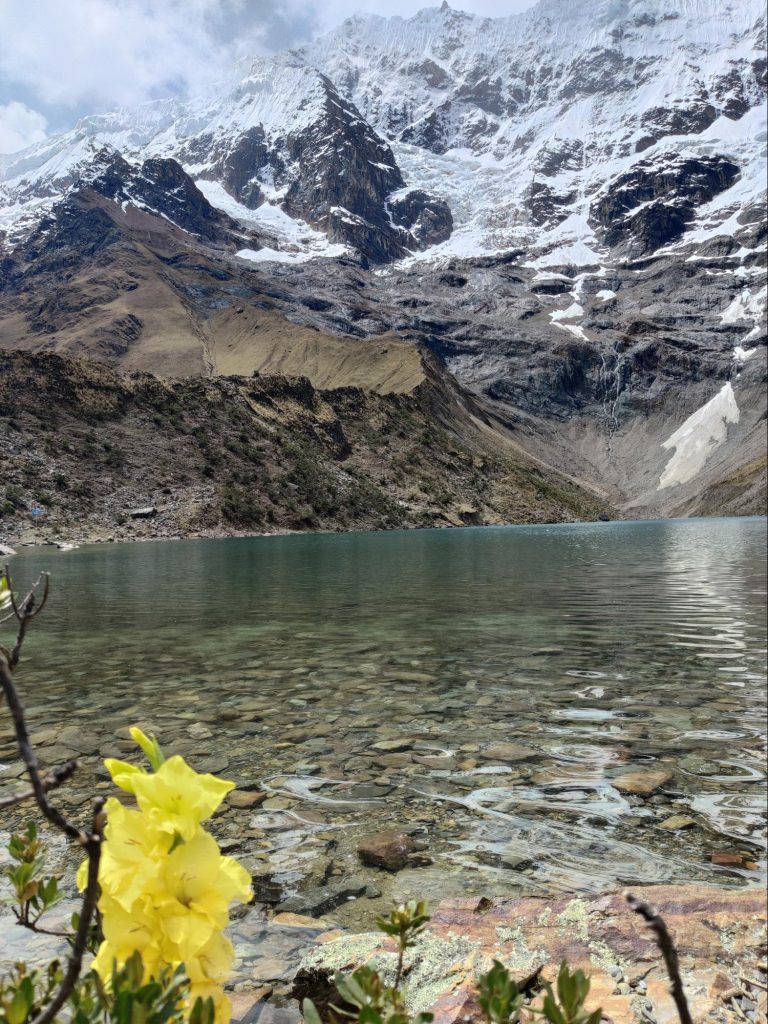
And who brings them? Surely not Catholics, or Peruvians? Who are these pagans? But perhaps they're still preserved somewhere along the ancient Inca Trail.
We return to camp. The walk back is much easier. Just as we enter our hut, it starts to rain. What luck! We rest, stretched out on the bed. It gets rapidly colder by evening, but it's good that there are at least four blankets. A little later, they feed us dinner. The warmth from dinner dissipates instantly as I brush my teeth outside with cold water in the thick evening twilight, with the temperature around zero. Quick, under four blankets! I need to make another effort and put on thermal pajamas. Through the glass roof of our hut, I can see the sharp teeth of Salkantay suffused with a purple twilight.

It's warm under four blankets, but my hands are cold because they're holding the phone. There's a book on the phone that I'm reading before bed. But I can't read for long because there's no power and I don't want to waste the battery. And why is there no power? Because, as it turns out, the electricity in the sockets comes from solar panels. No sun, no current. It's good that the light bulb is powered by another source (probably batteries). If only I'd known, we could have charged the phones earlier in the day! I put the phone aside and close my eyes. The warmth of four blankets induces drowsiness. It's still incredibly early, about seven in the evening, but considering we woke up at 4:30 in the morning and have to get up at five tomorrow, it's probably not that early. The fatigue of the first day is catching up with me, and I fall asleep thinking about how, on our summer trip, with the same air temperature, we felt great in a tent, in a sleeping bag. And here, with four blankets, it's not that hot.

